// RESEARCH
Usability test
The report is the product. The data stays with the client.
Nobody is alone in a Matilha.
// CONFIDENTIAL
The data stays with the client.
Names, times, 1-to-5 scores, sticky notes with literal quotes and the quantitative table stay in the client's PDF. What you get here is craft: how we test, how we rank, what kind of friction a flow like this tends to hide.
- Research
- Usability testing
Research gets designed too.
A Matilha usability test does not become a spreadsheet. It becomes a report with cover, contents, method, results, ranking and recommendation. The client keeps the dossier. The case shows the craft.
Challenge
Conecte.ai needed to know if a subscriber could find a plan alone. The test produces quotes, scores and tables that cannot leave the client. Research still has to show up as a case: that is what we sell.
Solution
We publish the method, not the dossier. This page shows how Matilha designs, runs and ranks a remote moderated test. Numbers, names and citations stay in the report the client receives.
// THE REPORT
A report with chapters, not a session dump.
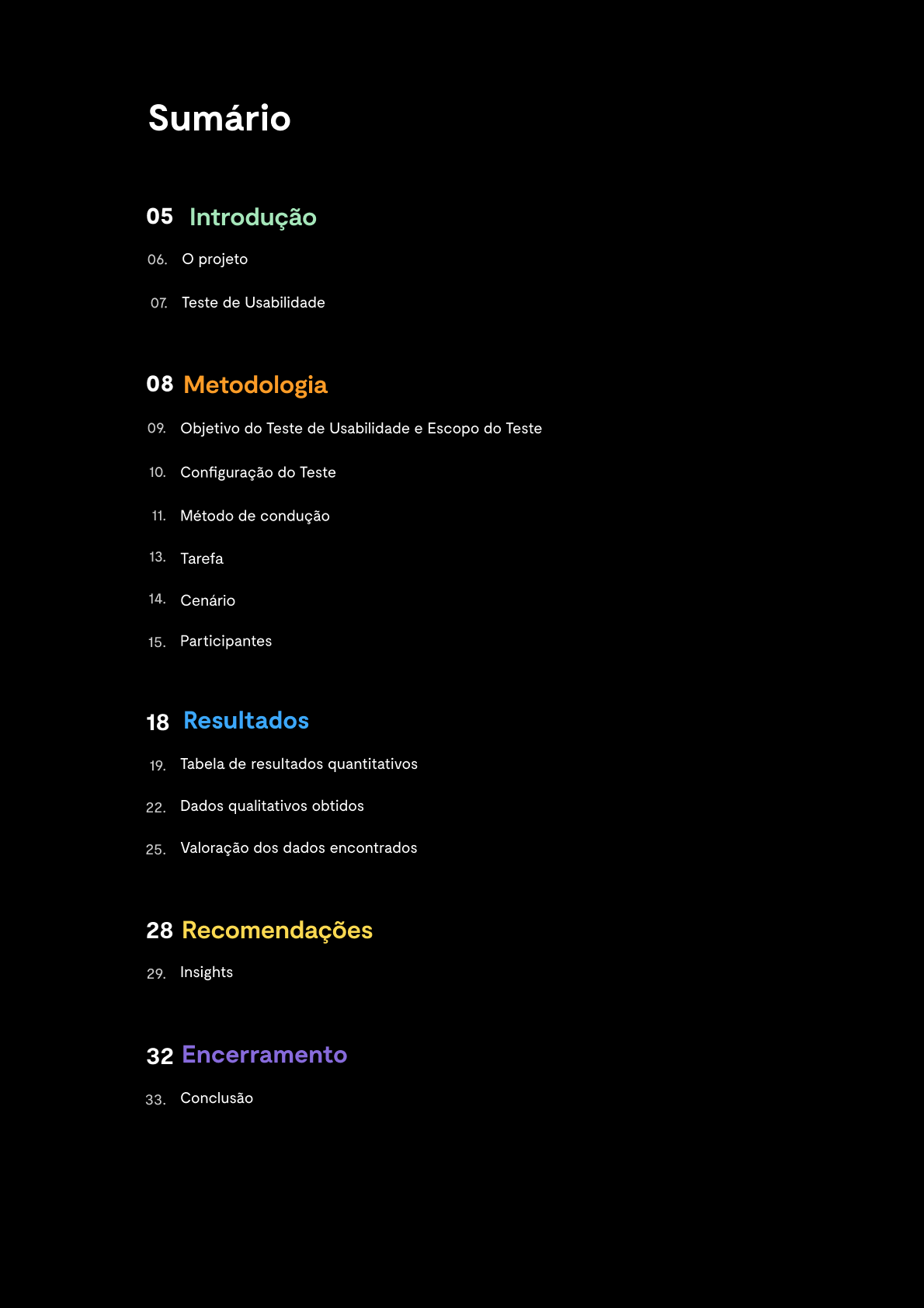
Cover, manifesto, contents, introduction, methodology, results, recommendations, close. The client pages through it. The team looks things up. Research stops being an appendix and becomes a deliverable.
- 01Introduction: the project and what the test came to answer
- 02Methodology: goal, setup, facilitation, task, scenario, participants
- 03Results: quantitative, qualitative, ranking
- 04Recommendations: insight by severity, not a loose list
- 05Close: the product works, the micro still needs tuning
// METHOD
The kit we bring into the session.
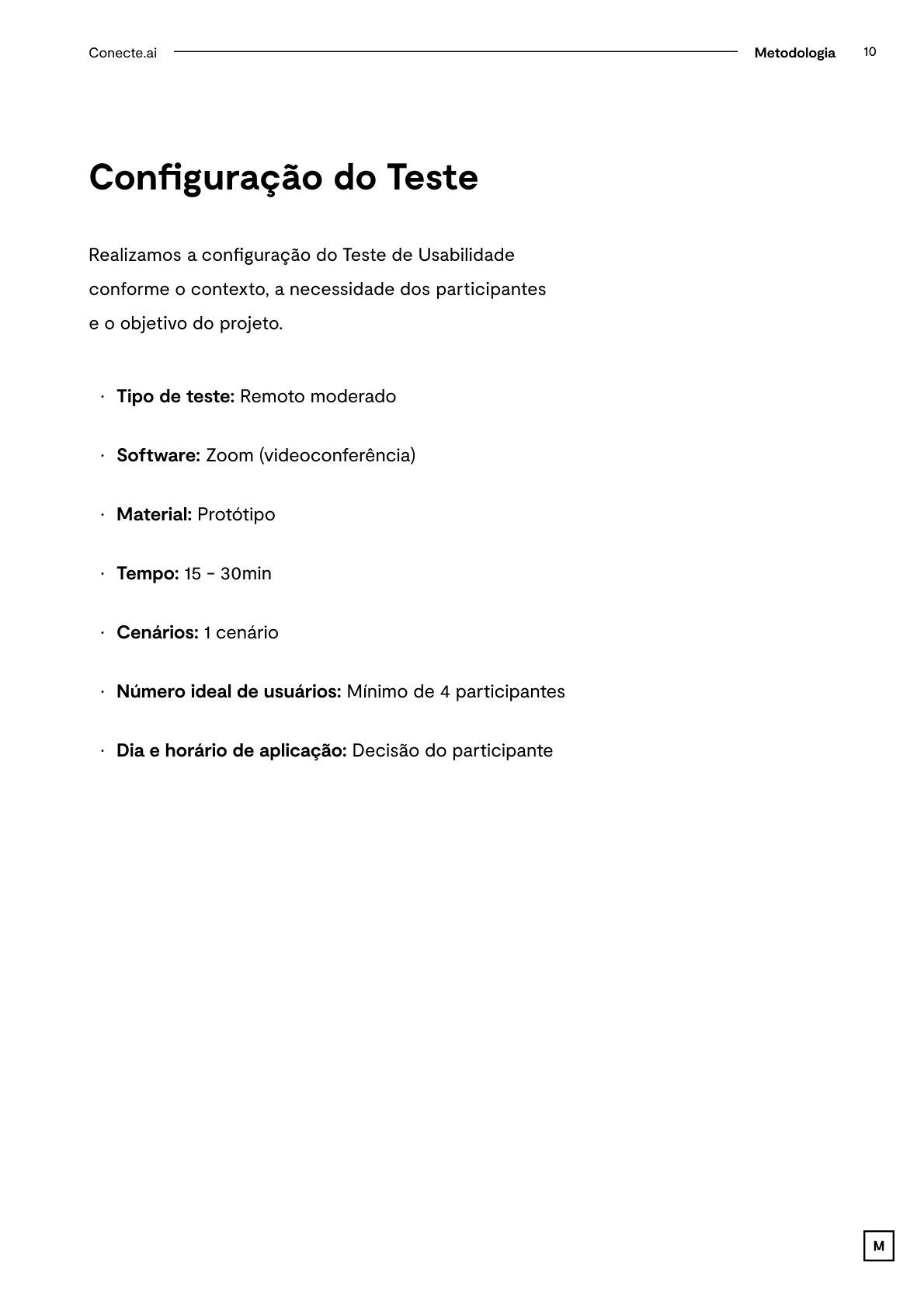
Before the camera goes on, the test already has a type, a duration, material and a cut. That is what we sell: a protocol, not an improvised chat.
- Remote moderatedVideo call. The participant is at home, on the live product or the prototype.
- 15 to 30 minA short session. One task. One scenario. No steering the click.
- 4 people or moreDifferent profiles, same cut: people who use the internet without being technical.
- One taskReach the recommended plan without dropping the form.
- One scenarioA new address, too many plans on screen, no certainty about speed.
- Two seatsThe moderator talks. Support takes notes. Nobody drives the other person's cursor.
// SESSION
Two roles on the same call.
A remote moderated test copies in-person research, with the room split across two screens. Quantitative measures whether they arrived and at what cost. Qualitative explains the path.
Methodology
Results
Designer who moderates
Explains the meeting, the product and the scenario. Asks behavioral questions. Avoids pointing at the button.
Support designer
Notes error, success and silence. Pulls the thread the moderator cannot chase in the moment.
// RATING
Five axes, without the client's score.
Each session becomes a 1-to-5 rating. The average across people shows the pattern. The score itself does not leave this page. The model does.
- Ease of completing the task
- Satisfaction during use
- Affinity with the interface
- Clarity of communication
- Errors made
// RANKING
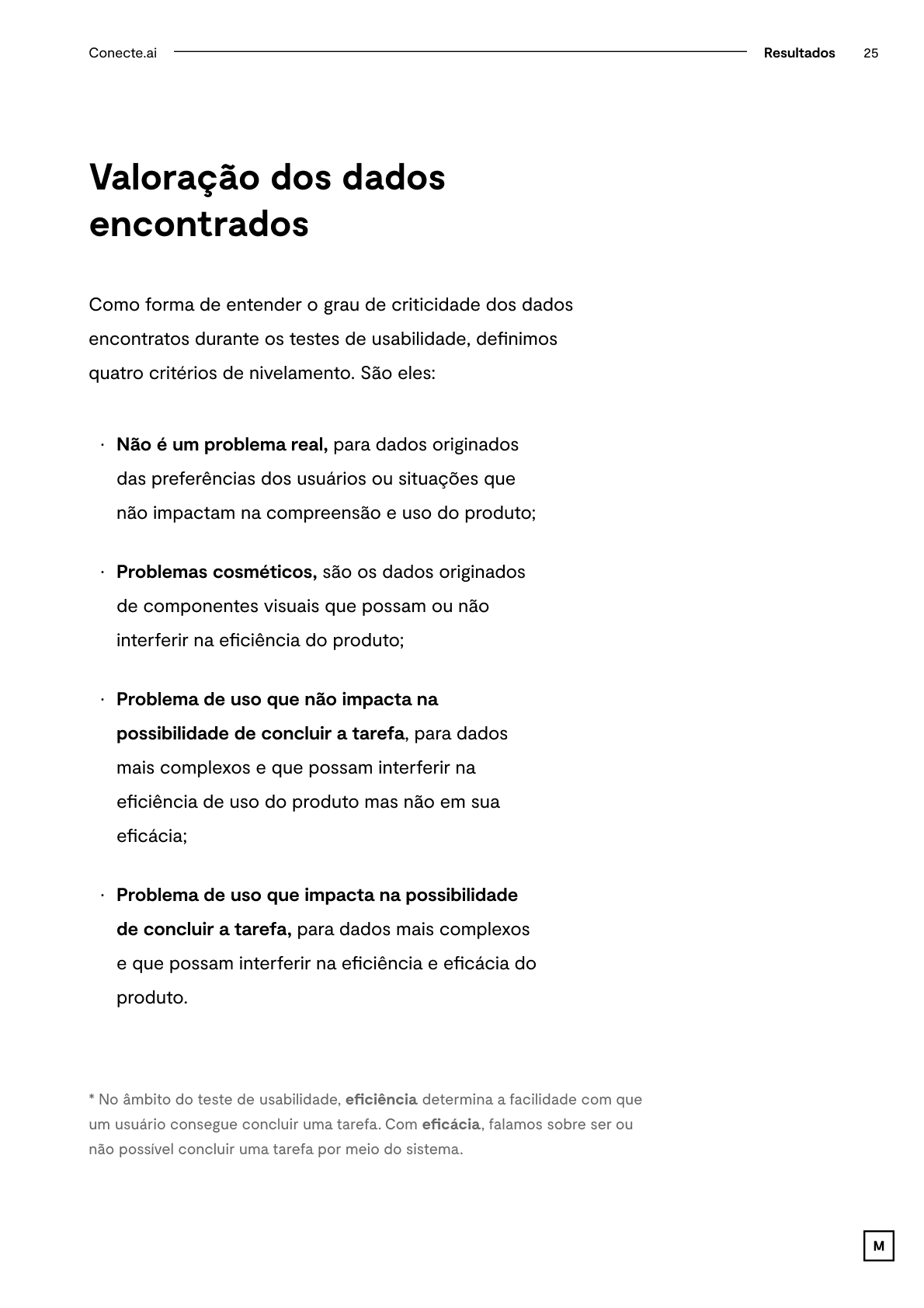
Four degrees of severity.
- 01
Not a real problem: preference or noise that does not change use.
- 02
Cosmetic: the control is understood, but it costs more than it should.
- 03
Use that does not block completion: the task ends, the path was worse.
- 04
Use that blocks completion: the task breaks. This product had none.
// WHAT WE FIND
The type of friction, not the quote.
We cluster qualitative notes into positive and negative, then by similarity, then by severity. What follows is the map, not the dossier.
The storefront competes with the shortcut.
People who come to compare plans miss the discover button. The mental model points at the cards, not the simulator.
A slider needs a why and a real count.
Grouping numbers instead of sequencing them, and asking for rooms without saying why, creates doubt. Use continues. Trust does not.
The question and the house are not the same thing.
Rooms in the house and rooms that need internet get mixed. The address field still wants a complement.
The plan shows up. The criterion does not.
Finishing is possible. Understanding why that plan and not the other still needs copy. Cosmetic, but it is what is missing to sign without calling.
// SPECIMEN
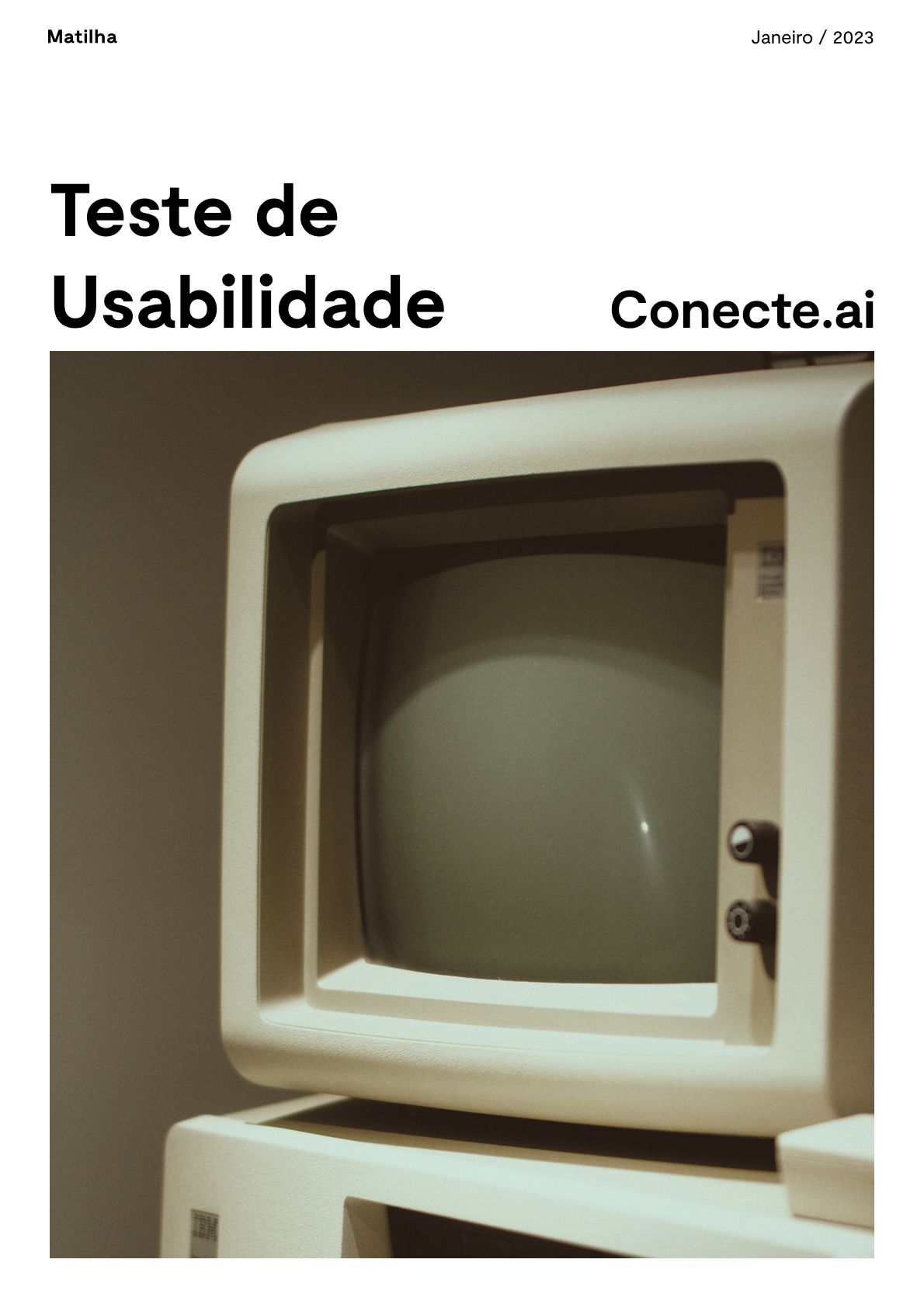
The artifact, without the dossier.
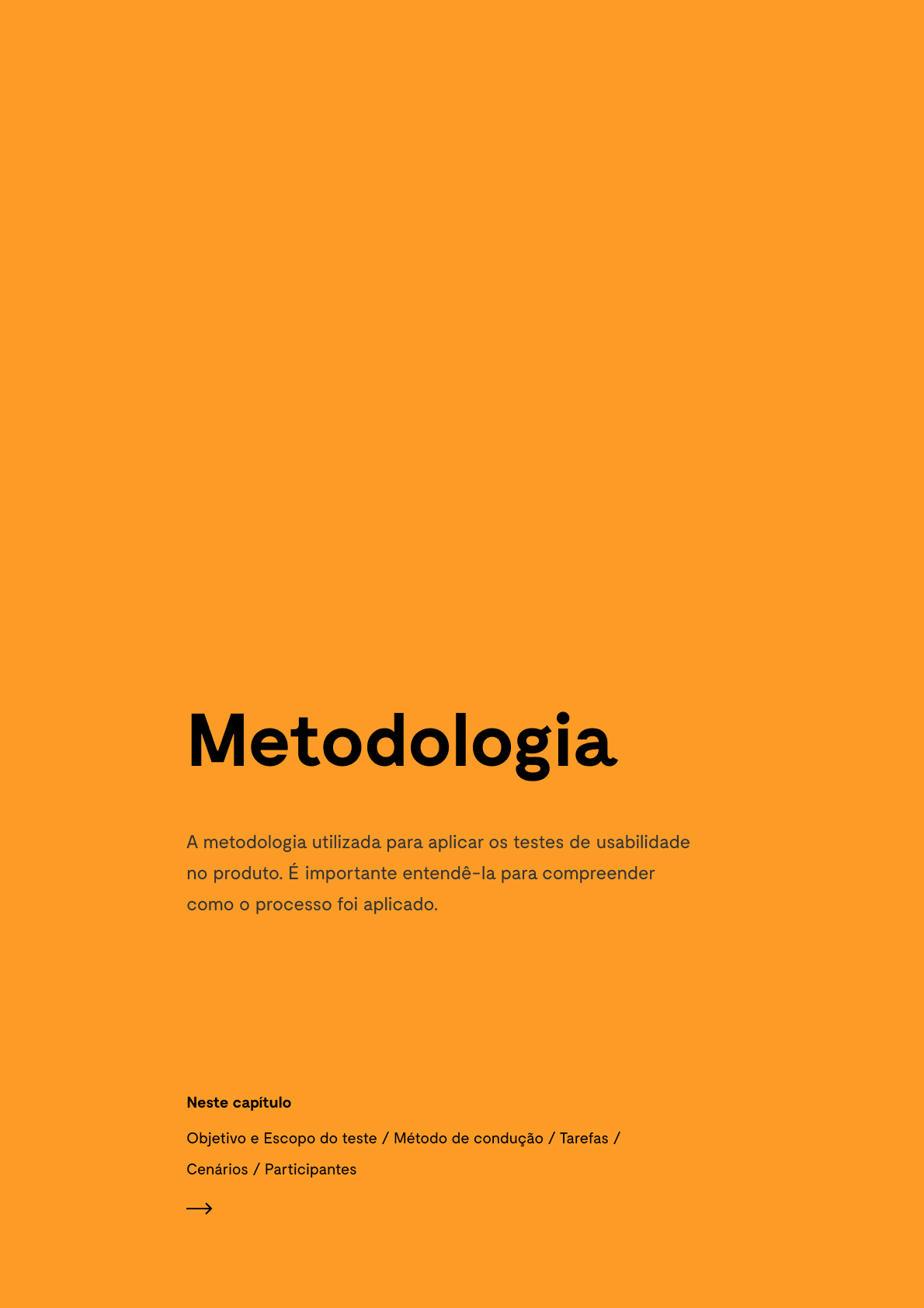
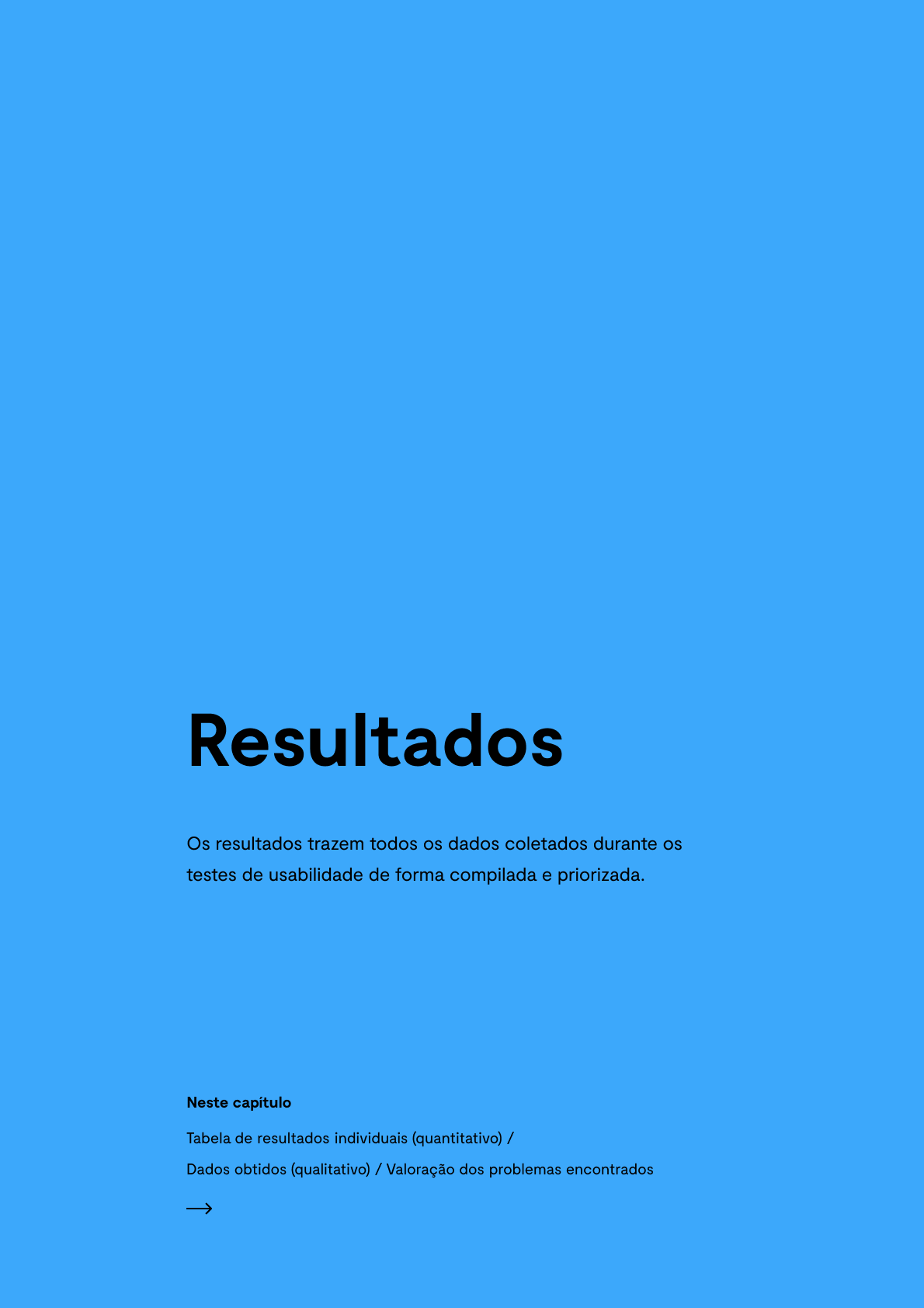
Cover, contents and chapter openers. Pages with quotes, scores and names do not enter this site.
Cover
Methodology
Results
Ranking
// TEAM
- Ilana Heymowski · Research and moderation
- Thomas Freitas · Support
- Karen Fernandes · Support